
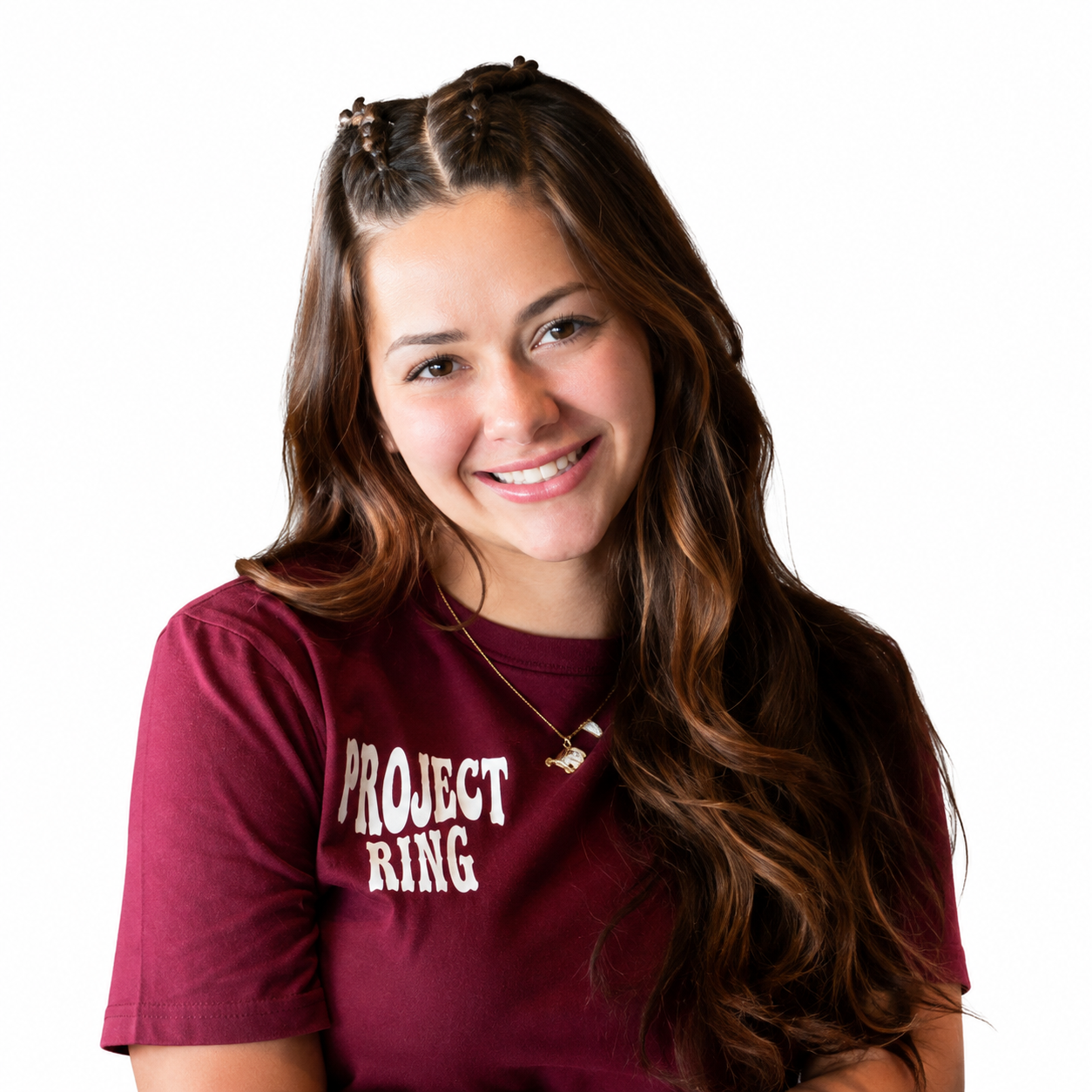
Founder & Executive Director
My name is Ashley Guillermo, and I founded Project Ring in 2016 at just 16 years old.
As a teenager, I struggled with my own mental health and often felt alone. It wasn't until I entered a therapeutic program in high school that I realized how many people around me were quietly facing similar challenges. The problem wasn't that we were alone—it was that too many people were suffering in silence because of stigma, limited education, and a lack of accessible support.
During that time, I made a promise to myself that my story would not end with my struggles. On my 16th birthday, I got my first tattoo: a semicolon connected to a heartbeat that flows into a butterfly. Inspired by the Semicolon Project, it represents resilience, hope, and the belief that every life has value. The butterfly holds an especially personal meaning, inspired by a therapeutic exercise that taught me healthier ways to cope and reminded me that healing is possible.
That same year, I founded Project Ring.
What began as a simple act of kindness has grown into Project Ring Inc., a registered 501(c)(3) nonprofit organization dedicated to bridging the gap between crisis and long-term support. Our mission is to connect individuals and families experiencing homelessness, mental health challenges, financial hardship, and other life obstacles with essential resources, compassionate support, and meaningful community partnerships.
Since its founding, Project Ring has grown from one teenager's vision into a community-driven nonprofit serving individuals across New Jersey. Through outreach events, resource navigation, community education, partnerships with local organizations, and the distribution of resource cards and essential supplies, we strive to ensure that no one has to face life's challenges alone.
Every interaction is guided by one simple belief: every person deserves to be treated with dignity, compassion, and respect.
Today, I have the privilege of serving my community as a paramedic in Jersey City. Every shift reinforces why Project Ring's mission matters. I witness firsthand how mental health challenges, homelessness, poverty, addiction, and barriers to healthcare often overlap. Emergency medical care is only one part of the solution. Lasting recovery requires connection, resources, and ongoing support long after the emergency has ended.
Project Ring exists to help fill that gap.
Whether we're providing resource navigation, supporting community outreach, distributing essential supplies, teaching lifesaving skills, building partnerships, or simply listening without judgment, our goal is to remind every person that they are worthy of hope, help, and the opportunity to move forward.
Sharing my story has never been about focusing on the past. It is about showing others that healing is possible and that difficult circumstances do not define who we become.
If even one person reads this and realizes they are not alone, then sharing my journey has been worth it.
Thank you for believing in our mission and for helping us build stronger, healthier, and more compassionate communities—one person, one connection, and one act of kindness at a time.
"Your struggles do not define you. Your circumstances do not determine your future. Everyone deserves hope, support, and the opportunity to begin again." - Ashley Guillermo
Ashley Guillermo
Founder & Executive Director
Project Ring Inc.
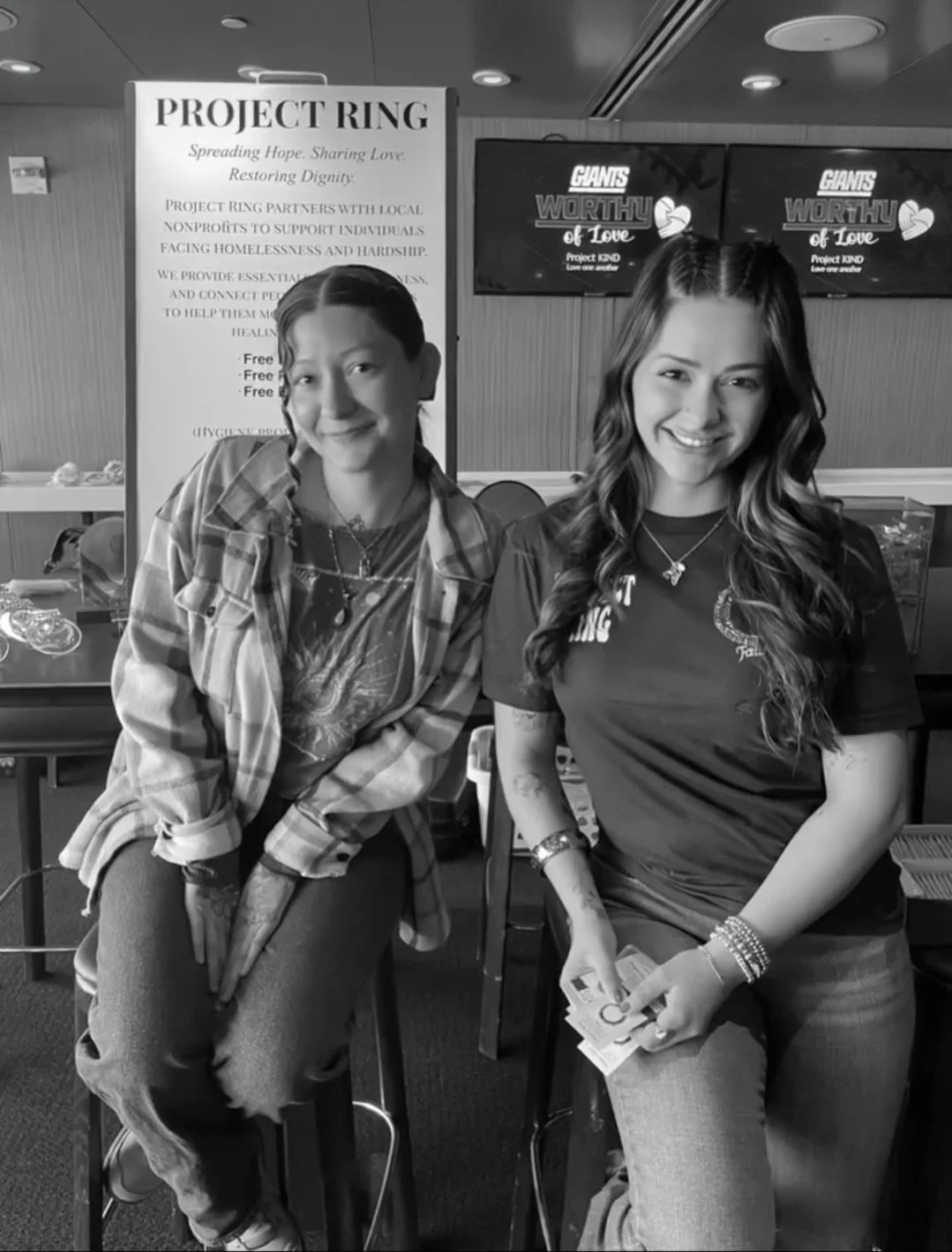
My sister and I have both faced many of life's challenges, and she has experienced struggles similar to my own. Through it all, she has shown incredible resilience, strength, and personal growth. Watching her overcome adversity has been inspiring, and I couldn't be more proud of the person she has become.
It is an honor to have her serve alongside me as part of the Project Ring volunteer team. Her compassion, lived experience, and dedication to helping others make her an invaluable part of our mission, and I am grateful to share this journey with her.